We think a baby is “just there” in the womb — small, quiet, sleeping, but the truth is much more exciting!
Your baby does a lot of things inside the womb — some you won’t believe! He hiccups, sucks his thumb, and sometimes even cries — without making a sound!
Today, let me tell you 10 facts that will make you love your baby even more.
1. The baby is hiccuping!
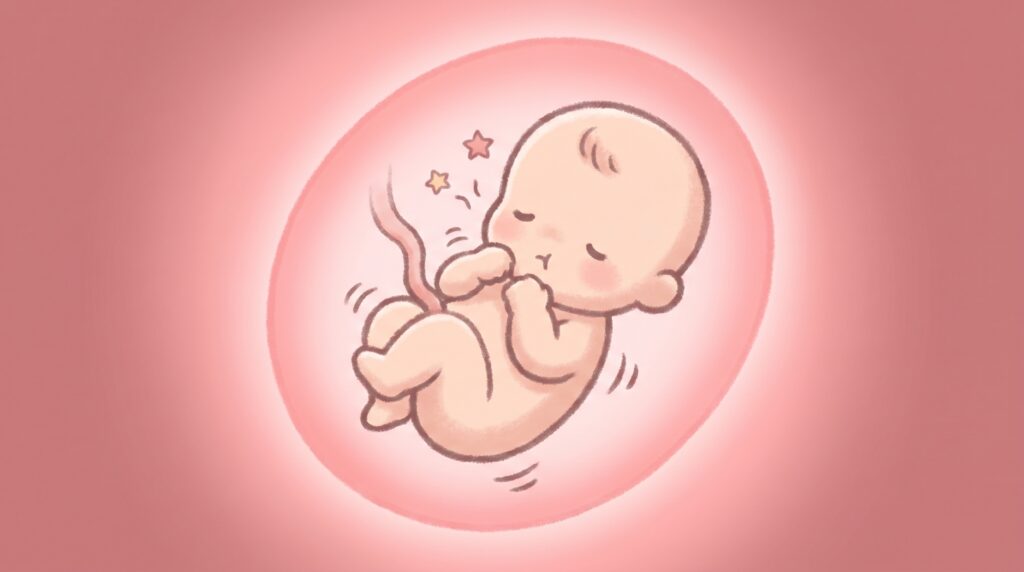
This is the cutest fact on the list. Babies start to hiccup from week 9!
What causes it? When a baby swallows amniotic fluid, sometimes the diaphragm — the breathing muscle — suddenly contracts. And that’s what causes hiccups!
Many moms can feel it — a light, regular “thump thump thump”-like sensation, distinct from kicks. It’s completely normal and a sign that the baby’s respiratory system is developing.
2. Baby sucks his finger.
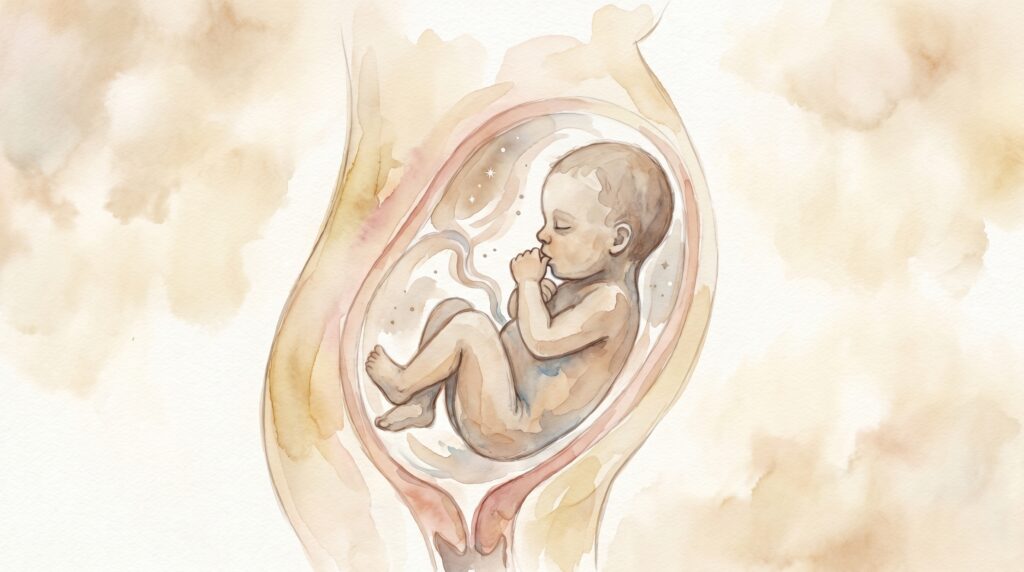
Everyone is grateful to see this – many babies are seen sucking their thumb on ultrasound!
This starts around week 15. The sucking reflex is important, as babies start practicing it long before birth — so when they are ready, breastfeed or bottle-feed immediately!
Some babies even put their whole hand in the water — exactly the same style they will do after birth!
3. Children dream!
You may be surprised to hear this – but it’s true!
Around week 28, your baby begins REM (rapid eye movement) sleep — the stage of sleep in which we dream.
Doctors have confirmed that they can’t tell what your baby is “seeing” — because there’s no way to see it yet! But the brain activity definitely suggests that something is happening in his brain, while he’s sleeping!
4. Baby cries – without sound
It’s an emotional reality. Researchers have found that a baby in the womb can make “crying”-like movements — facial expressions, breathing patterns, everything that sounds like crying — but it’s completely silent, because the lungs haven’t yet developed air.
This usually happens in the third trimester. It’s not a sign of emotional distress — it’s just a sign that the baby’s nervous system is mature enough to make complex facial expressions.
5. Baby moves his eyes.
After week 16, babies start to move their eyes — even when they’re closed!
These movements help them practice — so that when their eyes open (around week 26), they’re already using their strong eye muscles.
6. The child does “breathing exercises”
This may seem a little confusing — because the baby isn’t breathing in the amniotic fluid, right?
That’s right! But the baby is still practicing breathing movements — the diaphragm and chest muscles move, as if they’re breathing, but the amniotic fluid is moving in and out, not air.
This practice is so important that by the time the baby is born — their lungs are already “experienced” in breathing movements!
7. Baby reacts to touch.
Around week 25, your baby’s sense of touch is developed enough that he can react when you apply gentle pressure to his belly.
Many moms have noticed — when they gently push on his belly, baby pushes back! It becomes a cute “conversation” between mom and baby.
Research also suggests that babies can touch their face, look at their hands (palpate), and sometimes even “play” with the umbilical cord!
8. Baby has its own sleep schedule.
This fact surprises many mothers — the baby’s sleep cycle is different from yours!
Many babies are more active at night when the mother is resting — because the mother’s movements during the day (walking, working) “rock” the baby and put it to sleep, just like we rock a baby in a cradle!
That’s why at night when you pick her up — the baby suddenly becomes active. This is completely normal!
9. Even babies can taste it!

This fact is mind-blowing. Baby’s taste buds develop around weeks 13-15, and they can “taste” amniotic fluid!
The taste of what you eat — a little bit — is transferred into the amniotic fluid. So if you ate spicy food, ate garlic, or ate sweets — baby gets a little taste of what we taste!
Some research suggests that it may even shape baby’s future taste preferences — meaning the flavors you eat during pregnancy, your baby may like them more later on!
10. Baby can also feel stress.
This fact is important to know. When the mother is stressed, the baby can also feel it indirectly — because stress hormones can be transmitted to the baby through the placenta.
That’s why doctors always say that it is very important to rest during pregnancy — not only for you, but also for the baby!
The good thing is that when you are happy, relaxed, listening to calm music — this feeling also reaches the baby. So taking care of yourself is directly taking care of the baby!
Quick Summary Table
| # | Fact | When is the start? |
|---|---|---|
| 1 | Gives hiccups. | Week 9+ |
| 2 | Sucks finger. | Week 15+ |
| 3 | Sapne dekhta hai | Week 28+ |
| 4 | Silent cry | Third trimester |
| 5 | Moves eyes. | Week 16+ |
| 6 | Practice breathing. | Week 20+ |
| 7 | Touch reacts. | Week 25+ |
| 8 | Schedule your sleep | Second trimester |
| 9 | Can taste | Week 13-15+ |
| 10 | Feeling stressed. | Throughout pregnancy |
Frequently Asked Questions
Q: Is it normal to feel a baby hiccup? Absolutely! It’s a healthy sign that the baby’s respiratory system is developing.
Q: Does the baby know what I’m saying? Yes — the flavors of the food transfer a little in the amniotic fluid, and the baby can “enjoy” them!
Q: Does stress harm the baby? Occasional stress is normal and doesn’t cause problems. But chronic, long-term stress can affect the baby — so it’s important to rest.
Q: Why is baby more active at night? Because your movements during the day rock and soothe baby — when you rest, baby becomes active!
Q: Does silent crying mean a baby is sad? Not necessarily – this is a developmental milestone that shows that a baby’s nervous system can form complex impressions.
The last thing
After reading all these facts, one thing becomes clear — your baby is not “waiting” inside the womb. He is living his life. In his own world, with his own strength, but the poor star is active and alive.
It hiccups. It dreams. It sucks, it reacts, it tastes. It’s all so much love that the thought of winning, the more surprised one becomes.
We do this at the beat of a small heart — telling you these small, but very special things about your baby. 🌸
Which fact surprised you the most? Tell us in the comments, and follow our TikTok for more facts like this every day!
This article is for educational purposes only. Please consult your doctor for any medical concerns.