
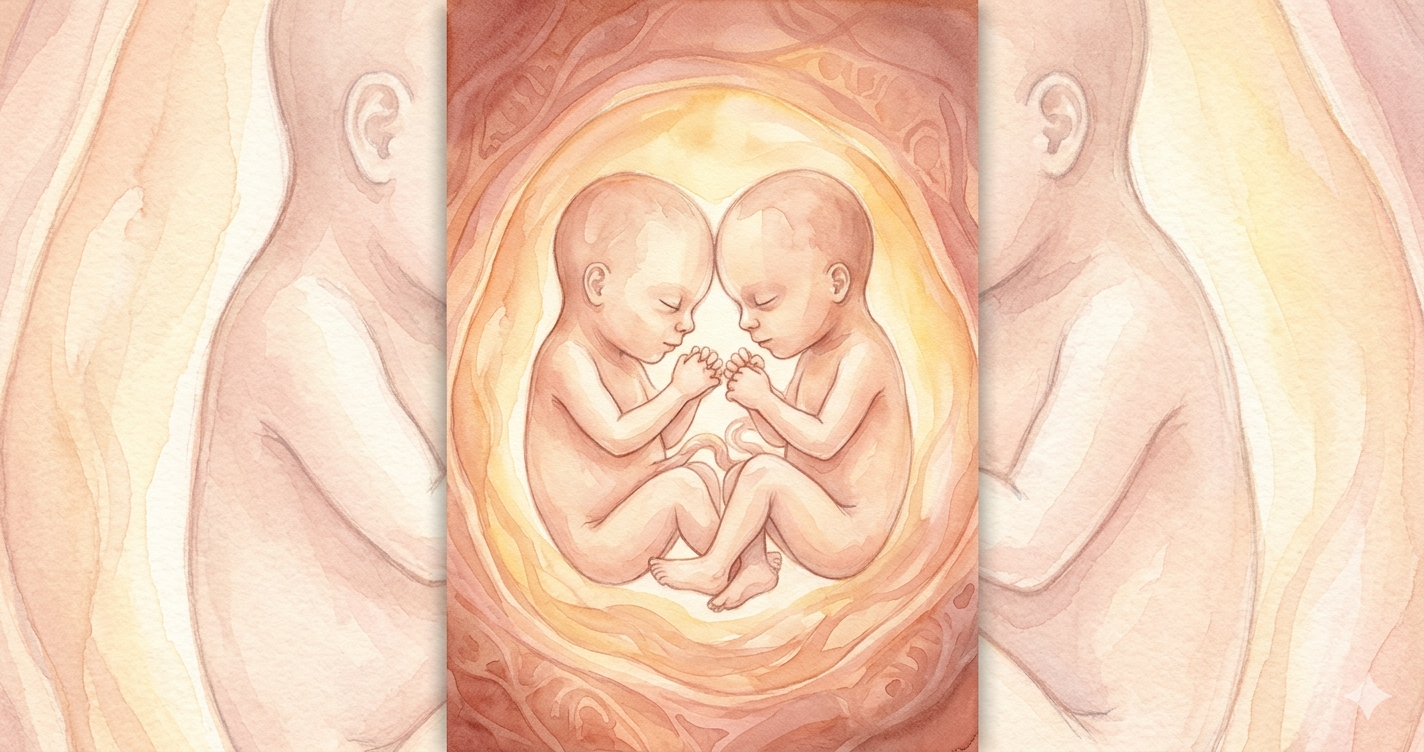
The journey of a single baby is so amazing — think two babies at once! Twin pregnancies are one of the most fascinating biological phenomena in the world. Two lives, growing together, in the same womb — and the process is so fascinating that it will leave you in awe.
Today, I will tell you all the facts about twins that you may have never heard before.
How are twins formed? Two are dark!
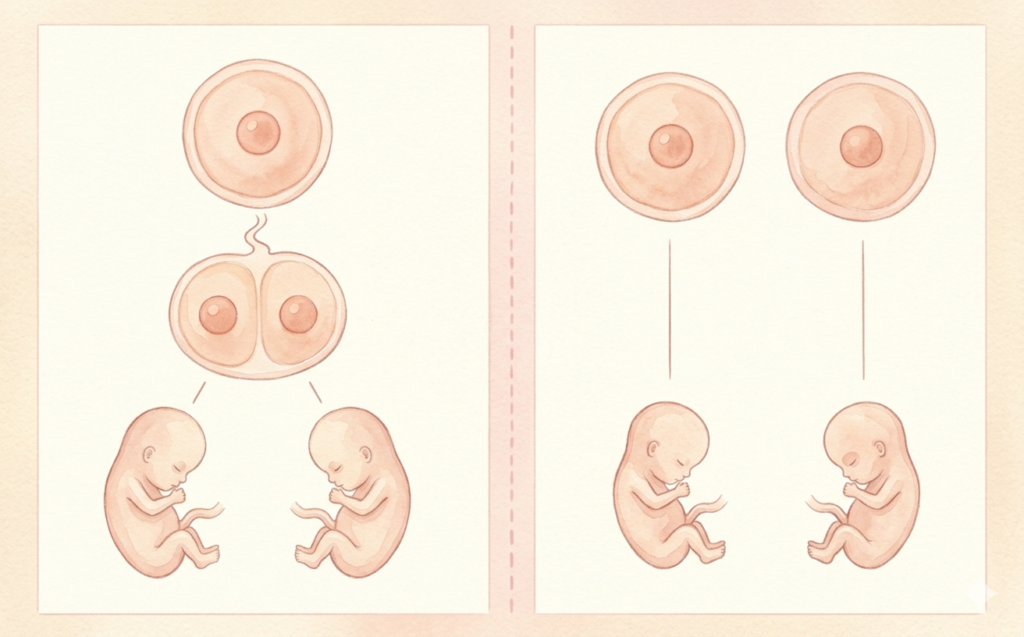
This is the most important thing to understand — twins can be born from two completely different genes, and this is determined by their poor nature.
Identical twins (monozygotic)
These are twins that occur when a single egg and a single sperm combine to form an embryo—and then this embryo splits into two!
Dono child:
- They share the same DNA.
- They are always the same sex (boy or girl).
- They look exactly the same—face, height, everything is similar.
Fraternal twins (Dzygotic)
These tabs occur when two separate eggs are released and fertilized by two separate sperm — basically like two separate pregnancies, written at the same time!
Dono child:
- Have separate DNA (just like normal siblings)
- Can be the same gender or different genders.
- You can see them completely differently – like normal siblings.
Fun fact: Fraternal twins are common — about 2 out of 3 twin pregnancies are fraternal!
When do identical twins split? This timing matters!
This is a very interesting fact — the time of separation of identical twins determines whether their pregnancy will occur!
Days 1-3 (Bohot initial distribution) Each baby has its own placenta and its own sac – a setup exactly like fraternal twins, but genetically identical.
Days 4-8 (most common) Dono babies share the same placenta, but each has its own separate amniotic sac.
Days 8-12 (less common) Twin babies share the same placenta and amniotic sac — this requires a little more monitoring during pregnancy.
Day 13+ (Bohot Rare) The division happens so late – so sometimes twins can form, where the babies are physically connected. This is very rare.
What is different in a twin pregnancy?
A twin pregnancy is quite different from a normal pregnancy — let’s see what’s different.
Early symptoms Many aunts say that the symptoms of a twin pregnancy – morning sickness, fatigue – come on more quickly and are stronger. This is because the levels of pregnancy hormones (hCG) are higher!
Faster Weight Gain Naturally, If the babies are growing – then the weight gain is also greater than in a single pregnancy.
Feeling the movement earlier Many mothers feel movement a little early in a twin pregnancy — because two babies are moving at once!
Earlier Delivery Twin pregnancies usually last 37-38 weeks, compared to 40 weeks for a singleton pregnancy – because space in the womb is at a premium!
Can twins feel each other in the womb?
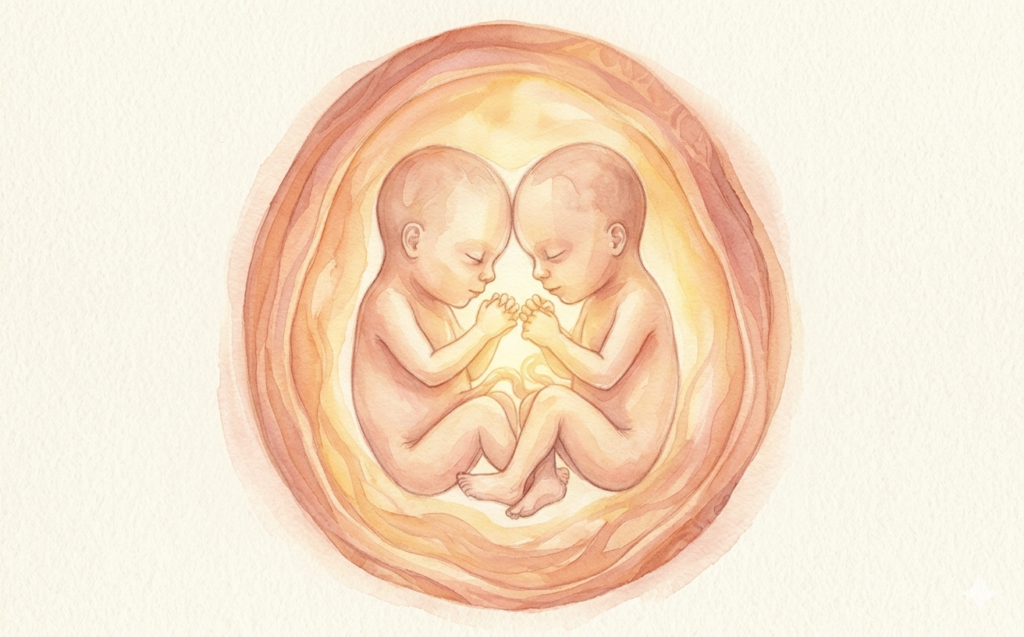
This is the cutest fact on the list! Research says – absolutely!
Ultrasound studies have shown that in the womb of twins:
✅ Touching a world ✅ They gently caress each other’s faces. ✅ They hold each other’s hands. ✅ Let’s see if we “play” sometimes!
It’s so emotional — think about it, this bonding begins between twins long before birth!
Twin Babies Position Wombman
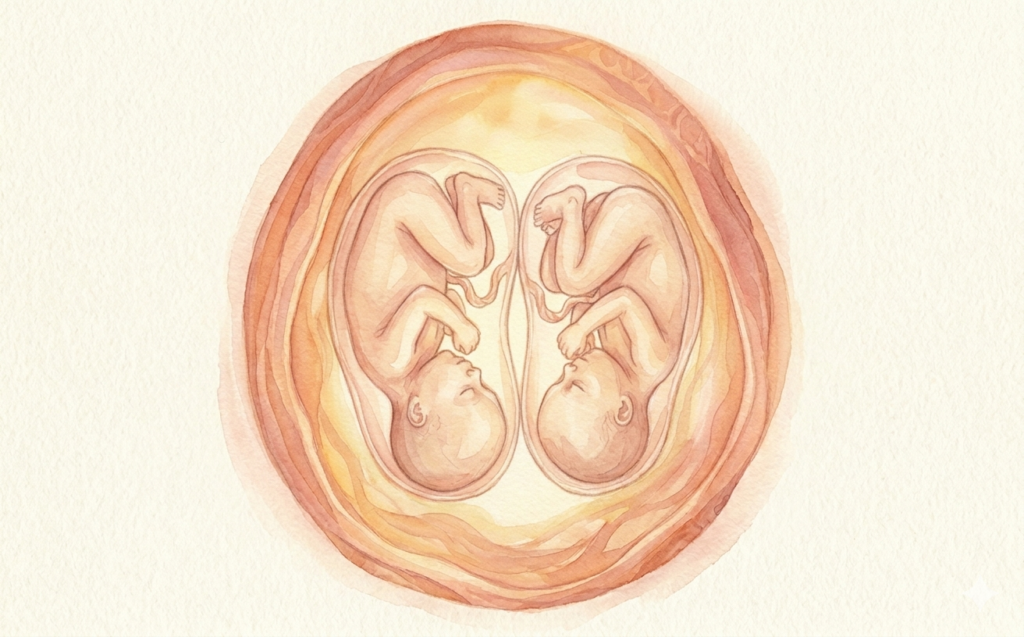
What babies in one womb — think how much space that would take up! Here are some interesting positions that twins can take:
Vertex-Vertex – both babies in the head-down position (the most common and safest for delivery)
Vertex-Breech — one baby head down, the other feet first
Breech-Breech – both babies feet first – in the first position
Doctors regularly check positions with ultrasounds — because this is what decides which delivery will be (normal or C-section).
Is twin pregnancy genetic?
This is a common question – do twins “run” in the family?
For fraternal twins: Yes, genetics play a role! If there is a history of fraternal twins in the family (especially on the mother’s side), then the chances are slightly higher – because this is related to the tendency to release more than one egg.
For identical twins: This is purely random! Identical twins cannot be predicted by genetics – they are a “chance event” when the embryo splits.
Mind-blowing facts about twin pregnancies
Fact 1: Twins’ heart rates may be slightly different — because each baby has its own heart!
Fact 2: Even identical twins have different fingerprints — even if the DNA is the same, fingerprints remain unique!
Fact 3: There is something called “vanishing twin syndrome” — sometimes twins are detected in the womb but one fetus is naturally absorbed early in pregnancy.
Fact 4: One of the twins is usually slightly larger than the other — this is normal and usually not a significant difference.
Fact 5: Mirror twins also exist — where identical twins have mirror-image features (like one right-handed, the other left-handed)!
Quick Comparison – Identical vs. Fraternal Twins
| Feature | Identical Twins | Fraternal Twins |
|---|---|---|
| Eggs | An egg splits. | Separate eggs. |
| DNA | Same | Different |
| Gender | Always the same | Same different |
| Appearance | Exactly the same. | Like a normal sibling |
| To be normal | Less common | More common |
Frequently Asked Questions
Q: Are there risks in twin pregnancies? Twin pregnancies require close monitoring because some risks (such as early delivery) are more common. With proper care, most twin pregnancies end in healthy outcomes.
Q: Can twins feel each other in the womb? Absolutely! Research shows that twins touch each other, reach out to each other — this bonding begins even before birth.
Q: When is a twin pregnancy detected in a normal pregnancy? Twin pregnancies are usually clearly detected at an early ultrasound (around 8-10 weeks).
Q: Do identical twins have the same personalities? No! Even if the DNA is the same, personalities, interests, and preferences can be quite different — environment and experiences also shape personality.
Q: How long does it take for twins to be delivered? Usually by 37-38 weeks – a little earlier than 40 weeks of pregnancy, because the uterus is working.
The last thing
Twin Pregnancy – This is not a “double the babies” surf. It’s a completely different, completely unique journey. Two lives, growing together, touching each other, supporting each other – much earlier, much earlier than we even get to see them.
Whether identical or fraternal — every twin pregnancy is a beautiful story in its own right.
At Little Heartbeat, we believe – every pregnancy journey is unique, and each one has its own unique miracle. 🌸
If you are going through a twin pregnancy or know someone – share this article with them! And follow our TikTok for more amazing facts like this every day!
This article is for educational purposes only. Please consult your doctor for any medical concerns.
