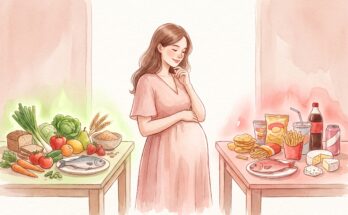
“What you eat, your baby eats” – you’ve probably heard this line many times, and the truth is, it’s absolutely true!
Eating during pregnancy isn’t just about satisfying your hunger — every bite directly affects your baby’s growth, development, and health. But don’t worry – it’s not as complicated as it seems!
Today I’ll tell you which foods are most important, what to eat, and what to avoid – all in plain language.
Folic acid – first and foremost
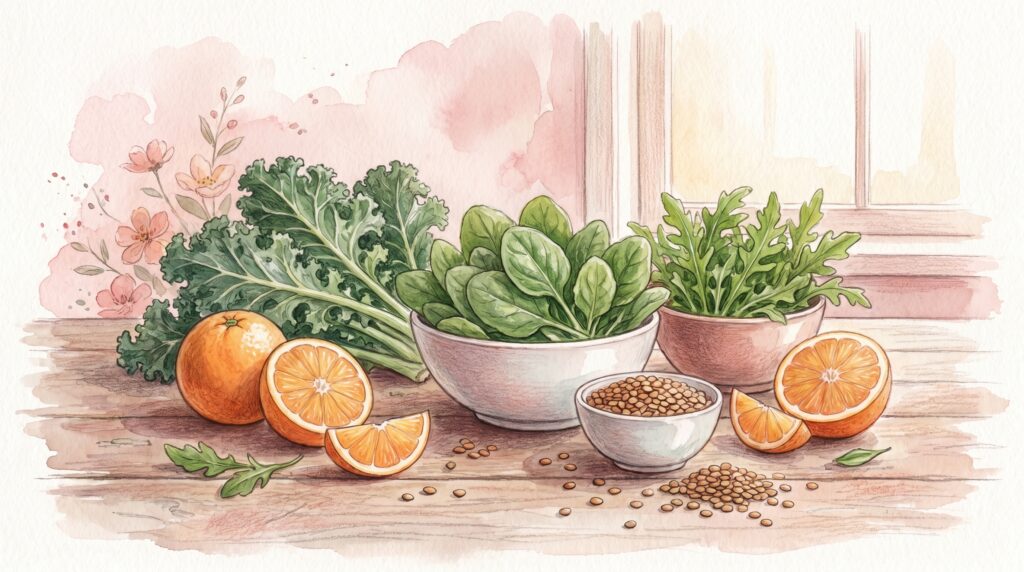
If I had to choose one nutrient, it would be folic acid.
Why is it important? Folic acid is important for the healthy development of a baby’s neural tube (which forms the brain and spinal cord). That’s why doctors recommend taking it before pregnancy!
Where can I get it?
- Spinach and green vegetables
- Lentils and beans
- Orange
- Strong grain
- Prenatal vitamins prescribed by a doctor
Protein – Baby’s Building Blocks
Protein is essential for building the cells, muscles, and organs of a child’s body – it’s basically the “building block”!
Where is it found?
- Egg
- Chicken and fish (well cooked)
- Lentils and chickpeas
- Dairy products (milk, yogurt, cheese)
- Nuts (almonds, walnuts)
Kitna Chahiye? Pregnancy requires a little more protein than normal – about 70-100 grams per day, but confirm this with your doctor.
Iron – the power of blood
During pregnancy, the body needs more blood – to carry oxygen to the baby. Iron is very important for IUI.
What happens with iron deficiency? If there is iron deficiency – anemia can occur, which can increase the risk of pregnancy complications such as fatigue, weakness, and anemia.
Where is it found?
- Spinach and green vegetables
- Red meat (if eaten)
- Lentils and beans
- Dried fruits Raisins
- Egg
Pro tip: Taking vitamin C (jasmine orange, nimbus) with iron is absorbable!
Calcium – for strong bones
Your baby needs calcium to build bones and teeth — and if you don’t get enough calcium yourself, your body can take calcium from your own bones for your baby!
Where do you get it?
- Milk, yogurt, cheese
- Green leafy vegetables
- Sesame (sesame)
- Almond
Omega-3 fatty acids – for brain development
This is a special type of fat that is very important for the development of the baby’s brain and eyes — especially in the third trimester when brain development is most rapid.
Where is it found?
- Fish (salmon, sardines – well cooked)
- Walnut
- Walnut
- Chia seeds
Vitamin D – Not for Surfers
Vitamin D helps absorb calcium and is also essential for the immune system.
Where is it found?
- Subah ki dhoop (10-15 minute)
- Egg
- Fortified milk
- Doctor-prescribed supplements
Fiber – the solution to a common pregnancy problem
Constipation is a very common problem in pregnancy – and fiber helps solve it!
Where to find it?
- Whole grains (whole grains)
- Fruits and vegetables (with peel where possible)
- Lentils and beans
- Oats
Healthy snacks – when hungry
Forgetfulness is common during pregnancy – here are some healthy breakfast options:
✅ Nuts with fruit ✅ Yogurt ✅ Boiled egg ✅ Vegetables with hummus ✅ Crackers with cheese.
Beware of this thing.
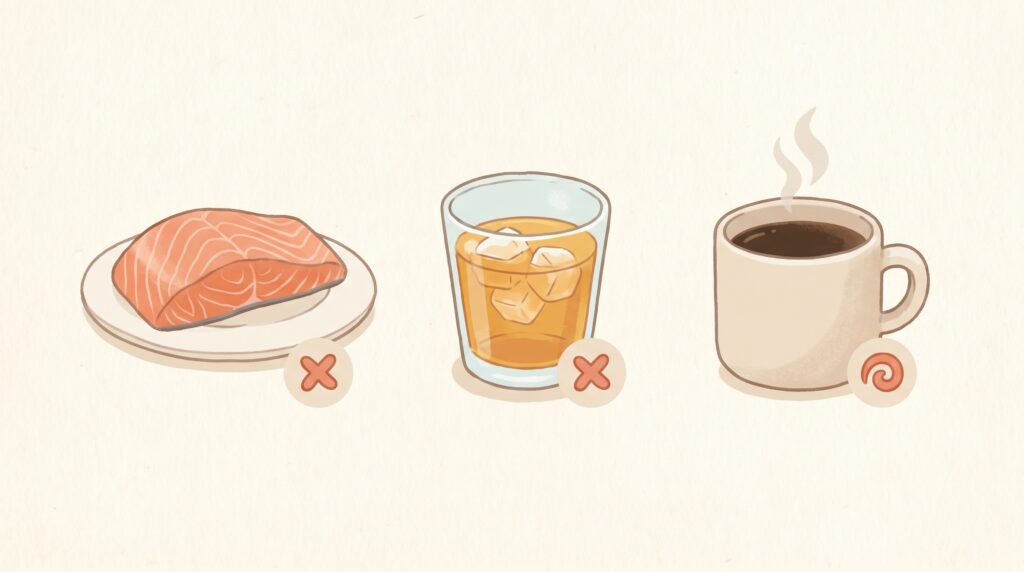
There are some foods that should be avoided during pregnancy – for safety:
❌ Raw or undercooked meat/eggs — Risk of infection ❌ Fish high in mercury (Jas shark, swordfish) – affects the child’s nervous system ❌ Unpasteurized dairy products — Bacterial risk ❌ Too much caffeine — Limit to 1-2 cups a day. ❌ Beer — Avoid completely. ❌ Raw sprouts — There may be a risk of bacteria.
One-day sample healthy eating plan
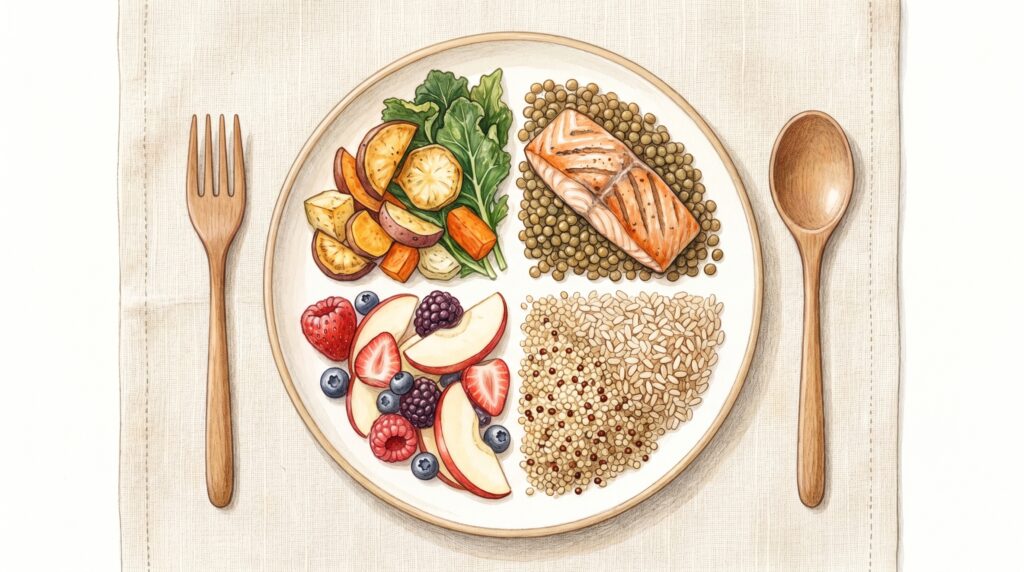
Here is an example – discuss your specific plan with your doctor:
Breakfast: Oatmeal with fruits and nuts, a glass of milk
Morning snack: An orange or seasonal fruit
Lunch: Bread, lentils, vegetables, salad
Evening snack: Yogurt or nuts
Dinner: Rice/bread, chicken or cheese, green vegetables.
Hydration – Water is equally essential.
Along with eating, drinking water is also very important during pregnancy:
✅ Drink 8-10 glasses of water a day. ✅ Helps in the production of amniotic fluid. ✅ Prevents constipation and UTI. ✅ Maintain energy levels
Quick References – Nutrients and their sources
| Nutrition | Why is it necessary? | Best Sources |
|---|---|---|
| Folic Acid | Brain/Spinal Cord Development | Green vegetables, lentils. |
| Protein | Body building | Green vegetables, lentils. |
| Iron | To make blood | Spinach, red meat, lentils. |
| Calcium | Strong bones. | Milk, yogurt, sesame seeds. |
| Omega-3 | Brain development | Fish, walnuts, chia seeds |
| Vitamin D | Calcium absorption | Sunlight, egg, fortified milk |
| Fiber | Digestion | Whole grains, fruits. |
Frequently Asked Questions
Q: Should I take prenatal vitamins in addition to food? Many doctors recommend taking prenatal vitamins—because sometimes all nutrients cannot be fully obtained from food alone. Be sure to discuss it with your doctor.
Q: Can I follow my normal diet with a few changes? Absolutely! You do not need to completely change your diet—just add essential nutrients and avoid certain things.
Q: Is it necessary to eat more during pregnancy? “Eating for two” does not mean eating double—the quality of food matters more than the quantity. In the second and third trimesters, roughly 300–450 extra calories are needed.
Q: What if I have morning sickness and eating is difficult? Try small, frequent meals, start with bland foods, and talk to your doctor if the problem becomes severe.
Q: Should caffeine be completely avoided? It is not necessary to avoid it completely, but keep it limited—up to 200 mg per day (roughly 1–2 cups of tea/coffee) is generally considered safe.
The last thing
Eating during pregnancy – this is not a surfeit of your own imagination, it is about giving your baby the first and most important gift of life – healthy nutrients, which will shape our growth, brain development, and future health.
You don’t have to be perfect – just being balanced and mindful is enough. And if ever confused, talk to your doctor or nutritionist – they can best guide you for your specific needs.
At Little Heartbeats, we believe – small healthy choices make a big difference. 🌸
And follow our TikTok for pregnancy tips and other articles on the website!
This article is for educational purposes only and is not medical advice. Please consult your doctor or nutritionist for your diet plan.