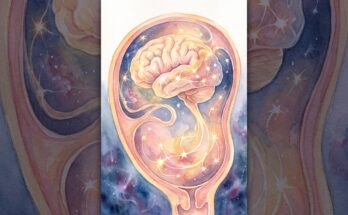
It’s a fact that most people know – during pregnancy, your body creates a whole new organ. Just for your baby. And after birth – this organ is gone forever.
This is the placenta – and honestly, it’s the most underrated but most amazing organ in the body. It literally keeps your baby alive for 9 months – it’s made from scratch, without any instructions, and it does its job so perfectly that we often ignore it.
Today I’m going to tell you what the placenta is, what it does for you, and some facts that will blow your mind.
What is the placenta?
In simple terms — the placenta is an organ that forms during pregnancy and connects the baby to the mother.
It brings two separate blood systems very close to each other — but does not allow direct mixing — and through it:
- The baby is receiving oxygen.
- The baby gets nutrients.
- Removes baby waste
- Hormones produce hot flashes.
- Protects children from infection (to some extent)
All this for one organ – which is made for surf pregnancy!
What is the umbilical cord made of?
The placenta story begins very early — you can’t imagine how early!
At implantation (week 4): When the embryo implants in the uterine wall, some cells begin to differentiate — these cells will become the placenta.
By weeks 8-12: The placenta is firm and connects to the mother’s blood supply via blood vessels.
By week 12: The placenta becomes less functional — this is when “control” of pregnancy is transferred from the ovaries to the placenta (in terms of hormone production).
Until birth: The placenta continues to grow as the baby grows — by the time of birth it weighs about 1.5 pounds (700 grams) and is 8-9 inches in diameter!
The most important function of the placenta – oxygen transfer.
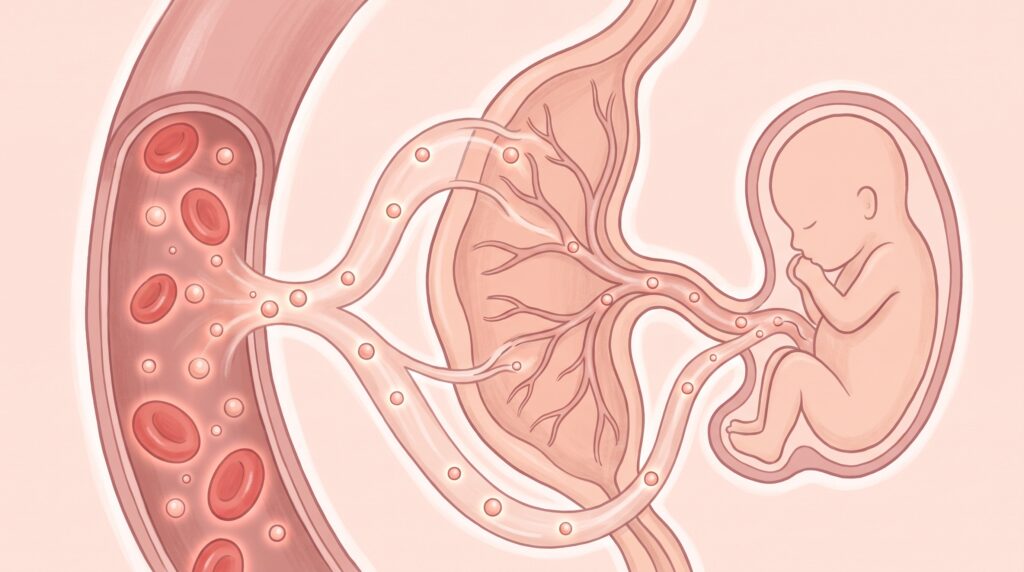
Babies can’t use their lungs in the womb – so where does they get their oxygen?
Here’s the beauty of the placenta:
The mother’s blood comes up to the placenta, rich in oxygen. Inside the placenta are special blood vessels that come into very close contact with the baby’s blood vessels – but not directly.
Oxygen molecules naturally “diffuse” from the mother’s blood into the baby’s blood through the thin membrane of the placenta – just like in the lungs, but here the placenta is acting as the lungs!
This process allows the baby’s carbon dioxide to return to the mother’s blood — which then comes out of the mother’s lungs.
So efficient is this system that the baby gets exactly the amount of oxygen it needs to survive — every second!
Nutrient Transfer – Baby Food
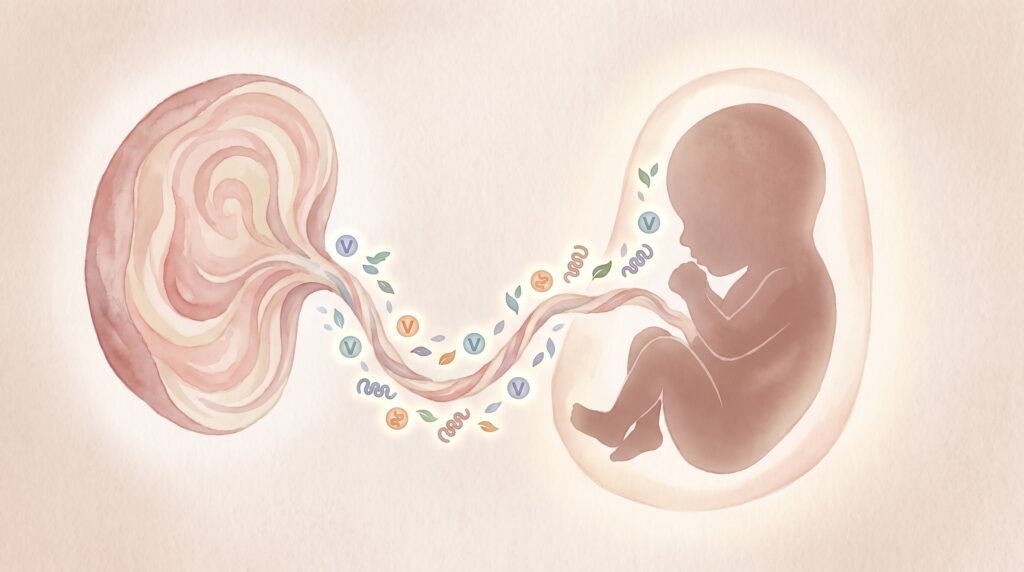
Like oxygen, nutrients are also transported through the dark:
✅ Glucose (sugar) – for energy ✅ Amino acids – for building proteins ✅ Fatty acids – for brain development ✅Vitamins and minerals – for overall development ✅ Water – for hydration
All of this passes from the mother’s blood to the baby’s blood through the umbilical cord — just like a state-of-the-art filtration and delivery system!
Waste removal – baby’s “toilet” system
This part is also interesting. The baby has kidneys – but they are not functional in the womb (because the baby does not “pee” in the womb like we do).
The placenta does this: The baby’s waste products (such as urea) pass through the placenta into the mother’s blood – then the mother’s kidneys filter these waste products and water comes out!
Meaning: The mother’s kidneys are literally working for the baby during pregnancy!
Hormone production – the hidden function of the placenta
The placenta is not just a transport system—it is also a hormone factory!
hCG (Human Chorionic Gonadotropin): This is the hormone that pregnancy tests detect! The placenta produces it right from the beginning.
Progesterone: This hormone maintains pregnancy—it keeps the uterus relaxed and prevents contractions until the right time.
Estrogen: It helps in the development of the baby’s organs and prepares the mother’s body for delivery.
Human Placental Lactogen: It adjusts the mother’s metabolism so that more nutrients are available for the baby.
Placenta protection – can everything be prevented?
One important misconception needs to be clarified here—many people think the placenta is a “perfect barrier” that blocks everything. That is not entirely true.
What the Placenta Can Block (To Some Extent):
✅ Some bacteria
✅ Some large molecules
✅ The mother’s own blood (there is no direct mixing)
What the Placenta Cannot Block:
❌ Alcohol — crosses freely
❌ Nicotine — crosses freely
❌ Some viruses
❌ Some medications and drugs
❌ Caffeine (in small amounts)
That is why doctors advise avoiding smoking and alcohol during pregnancy—because the placenta cannot prevent these substances from reaching the baby!
Placental Position – Why Does It Matter?
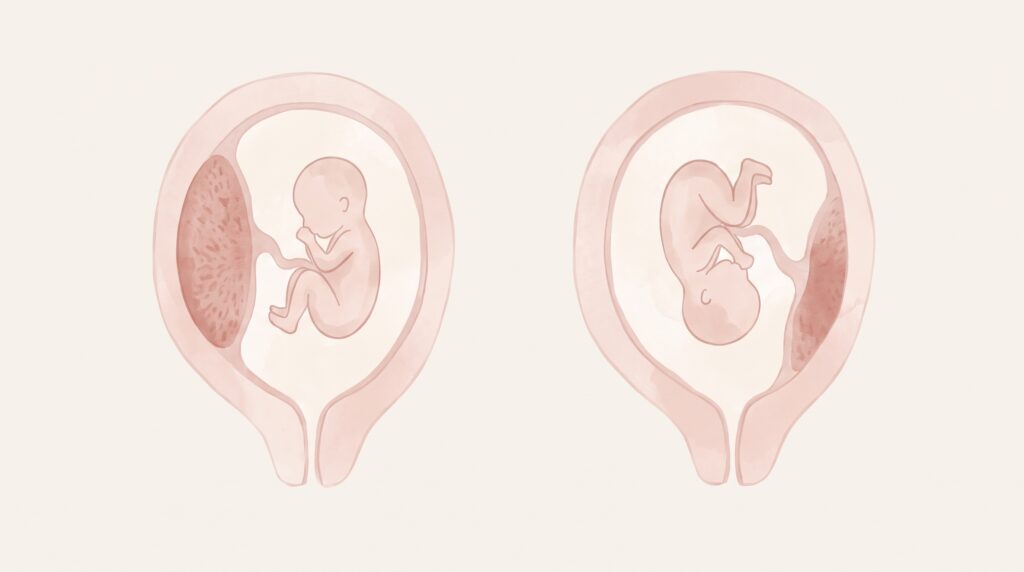
The placenta can attach anywhere in the uterus—and its position does matter to some extent:
Anterior Placenta: Attached to the front wall—this is very common. You may feel the baby’s movements a bit less clearly because the placenta acts like a “cushion.”
Posterior Placenta: Attached to the back wall—you usually feel the baby’s movements more clearly.
Placenta Previa: When the placenta covers the cervix—this is a condition that doctors monitor because it can cause problems with a normal vaginal delivery.
During regular ultrasounds, the doctor checks the position of the placenta!
After birth – the final function of the placenta
When the baby is born, the placenta has completed its job. This is also part of the delivery process (Stage 3 of labor, which we discussed in the previous article).
Some Interesting Facts About Placenta Delivery:
- The placenta is usually delivered within 5–30 minutes after the baby is born.
- Doctors check the placenta to make sure it has come out completely — an incomplete placenta can cause infection.
- In some cultures, the placenta is disposed of in a special way (cultural traditions).
- Some people practice placenta encapsulation (a controversial practice — there is no strong scientific evidence supporting it).
Mind-blowing umbilical cord facts
Fact 1: The placenta is made up of the baby’s DNA — not the mother’s! It’s fascinating because it’s a “foreign organ” that the mother’s body accepts.
Fact 2: The placenta contains about 300 million blood vessels until birth!
Fact 3: About 500 milliliters of blood flow through the placenta every minute from birth!
Fact 4: The surface area of the placenta is about 10-14 square meters — large enough for gas and nutrient exchange to occur efficiently!
Fact 5: The placenta is a temporary organ — no other organ in the body is formed, functions, and then permanently sheds!
Quick Summary — Functions of the Placenta
| Function | What does it do? |
|---|---|
| Oxygen Transfer | It carries oxygen from mother to child. |
| Nutrient Delivery | There is glucose, protein, vitamin data. |
| Waste Removal | The baby’s waste is sent into the mother’s system. |
| Hormone Production | Makes hCG, progesterone, estrogen. |
| Partial Protection | Protects against some bacteria. |
| Immune Support | Some of the mother’s antibodies reach the baby. |
Frequently Asked Questions
Q: How long does it take for the placenta to fully develop? By about week 12, the placenta becomes functional and “takes over” the production of pregnancy hormones.
Q: Can the placenta protect the baby from everything that is harmful? No – the placenta is partially protected. Alcohol, nicotine, and some drugs can cross freely. Lifestyle choices are very important in pregnancy.
Q: What is placenta previa? When the placenta partially or completely covers the cervix. This is monitored by doctors and done according to a delivery plan.
Q: Is umbilical cord encapsulation safe? There is no strong scientific evidence for its benefits, and there are some potential risks (such as bacterial contamination). It is important to discuss this with your doctor if you are interested.
Q: How much does the umbilical cord weigh at birth? About 1.5 pounds (700 grams) — it’s a vital organ that builds the body for 9 months!
The last thing
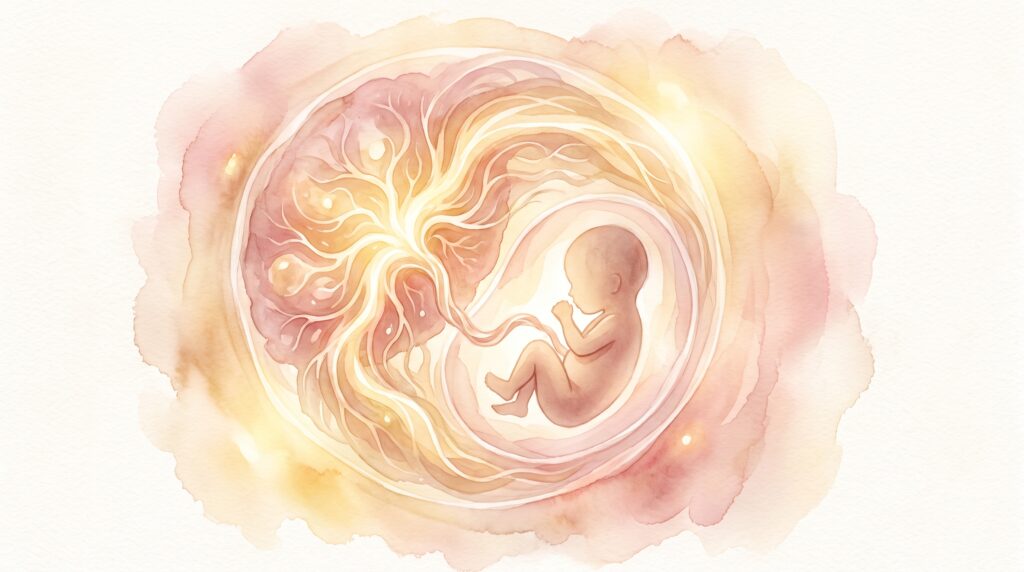
The umbilical cord – This marriage is the most unsung hero in the poor journey of pregnancy. No one takes pictures of it, no one throws a baby shower for it — but it literally keeps the baby alive every second.
It’s the organ of the body that is built for love — to support someone else’s life, without asking for a permanent place of its own.
The next time you think about your pregnancy journey – remember the umbilical cord too. This marriage is the quietest, but most powerful hero of the poor story. 🌸
And for more amazing pregnancy facts, stay tuned to our other articles and follow us on TikTok!
This article is for educational purposes only. You should always consult your doctor for any concerns you may have about your umbilical cord.