The baby is here. The moment you’ve been waiting for for 9 months – it’s here
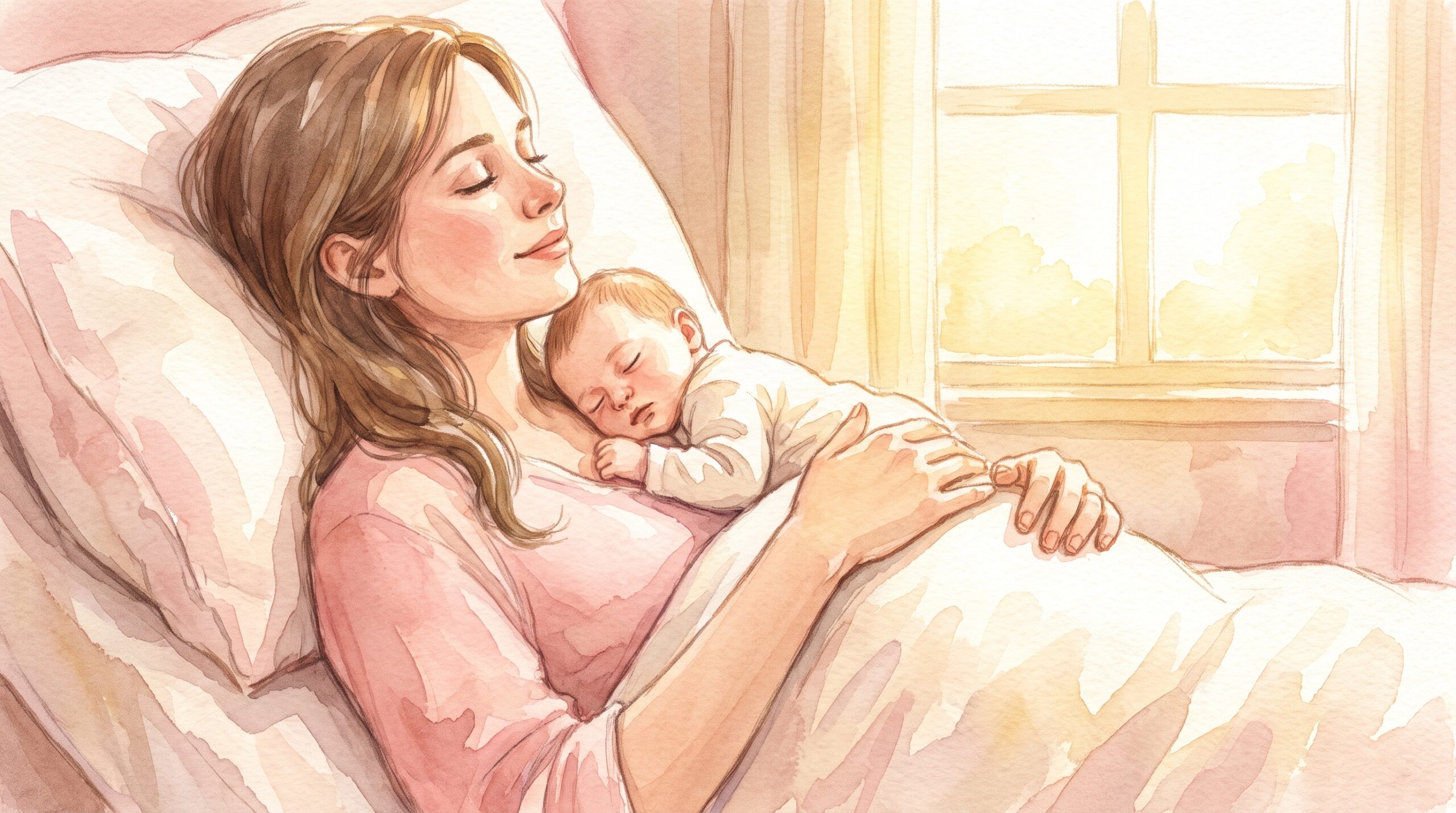
But now? Now another journey begins – postpartum recovery. And honestly, this journey is one that many mothers have never talked about. Many mothers say they had no idea what would happen to the baby’s body.
Today I’ll tell you the truth – what to expect postpartum, what the physical changes are, what the emotional journey will be like, and when it starts to feel normal.
What is postpartum?
The postpartum period is the time that begins after delivery – the first stage of about 6 weeks, but honestly, it can take a lot of recovery time.
Doctors also officially call the first 6 weeks the “fourth trimester” – because this period is so important to getting pregnant.
First 24-48 hours — in the hospital
Bleeding (lochia)
Vaginal bleeding is normal after having a baby – whether it’s a vaginal delivery or a C-section. Is it called lochia?
It occurs in distinct stages:
- First 3–4 days: Heavy, bright red bleeding
- Week 1-2: Light, pink or brown
- Week 3-4: Yellow or cream color, very light
- Week 4-6: Mostly done. Stop.
Call the doctor if:
- The bleeding suddenly increases.
- Large clots (larger than golf ball size)
- It smells bad.
Uterine contractions (after pain)
Contractions still occur after the baby is born — they help the uterus return to its normal size.
They are more common in breastfeeding mothers — because breastfeeding releases oxytocin, which stimulates contractions.
They usually improve within 2-3 days.
Perineal pain (normal delivery)
If there has been a normal delivery – the perineal area (around the birth canal) is swollen.
For relief:
- Ice pack (wrapped in a towel)
- Warm sitz bath (with a bath in water)
- Peri bottle (cleaning with water)
- Painkillers prescribed by the doctor
C-section recovery
After a C-section:
- 3-4 days stay in hospital
- The incision site will be sore — it is important to keep it clean.
- Movement will have to be restricted for the first week.
- Avoid driving for about 4-6 weeks.
- Avoid heavy lifting – except for the baby!
Week 1-2 — Back home
Exhaustion – it’s real!
This surf won’t feel “a little bit rough.” It’ll be bone-deep, overwhelming fatigue — the exhaustion of labor, hormonal changes, and the nightly feedings of a newborn — all rolled into one.
Advice: “Sleep when the baby sleeps” — it’s cliché but true. Visitors, cleaning, cooking — it’ll all be in the wind. You and the baby first.
Breast changes
Whether you breastfeed or not — your breasts will change:
Activity: Breasts may become full, hard, and sore during the milk let-down period (about 3-5 days).
Breastfeeding mothers:
- Nipple pain is common – especially in the first weeks.
- Proper latching is important – it’s perfectly normal to ask for help from a lactation consultant.
- It takes 2-4 weeks for demand to supply to be established.
Non-breastfeeding mothers:
- The milk supply will gradually dry up.
- A tight bra and ice packs help.
- It will be normal in 1-2 weeks.
Postpartum sweating.
This is an unexpected thing — many moms sweat a lot postpartum, especially at night!
Why: The body is getting rid of the extra fluid from pregnancy — it usually gets better within 2 weeks.
Hair loss
It can start as early as week 3-4 — sounds so scary!
Why: Estrogen during pregnancy keeps hair growing — postpartum estrogen drops and hair loss begins.
Good news: It’s temporary — it returns to normal in 6-12 months!
Weeks 3-6 — Gradually getting better
Physical healing
- Perineal soreness is much better by weeks 2–3.
- C-section scar less painful in weeks 3-4
- Most of the bleeding stops.
- The energy starts to return slowly.
Postnatal checkup
The doctor’s checkup is about 6 weeks later — leave it to Matt Crane! I have:
- Physical healing is tested.
- Contraception is discussed.
- There is a mental health screen.
- Breastfeeding guidance is provided.
Emotional Journey – Honest Talk
This part is very important and too often overlooked.
Baby blues (common)
What is it: Mood swings, anxiety, crying spells in the first 2 weeks after delivery – elixir without a reason.
Why: Hormones drop dramatically after delivery — estrogen and progesterone, which have been high for 9 months, suddenly drop.
How many moms get it: About 70-80% of moms!
When does it happen: Usually gets better on its own within 2 weeks.
Postpartum Depression (PPD)
This is different from the baby blues:
| Baby Blues | Postpartum Depression |
|---|---|
| Better in 2 weeks | Lasts more than 2 weeks. |
| Light-hearted swings. | Severe, daily symptoms |
| Doing normal work | Daily life is affected. |
| Hormonal, temporary | Medical attention is needed. |
Symptoms of PPD:
- Persistent sadness or emptiness
- Feeling disconnected from the child
- Anxiety or panic attacks
- Sleep problems (except for children)
- Intrusive thoughts
- “I’m not a good mother” feelings
Important: PPD is a medical condition – not a weakness! About 1 in 5 mothers have it. If you have these signs – see your doctor immediately.
Postpartum Anxiety
Separate from PPD – anxiety is also common. Constant worry, racing thoughts, thinking too much about the baby.
This is also treatable – talk to a doctor.
Identity Change
It’s also real – some moms feel like, “Who am I now?” Becoming a surf mom changes your identity. This is a common and valid feeling.
Long-term changes in the body
There are some changes that are honestly long-term:
Diastasis recti
During pregnancy, the abdominal muscles can separate—this is called diastasis recti. It can make your tummy look like a “pooch” even if your weight is normal.
Pelvic floor physiotherapy can be very helpful.
Pelvic floor changes
The pelvic floor can be weak after delivery — urine leakage (especially when coughing, sneezing) is common.
This can be improved with Kegel exercises — but professional guidance is effective.
Stretch marks
These fade over time – usually not completely gone, but become considerably lighter.
Shoe Size
Ha — some moms’ shoe sizes change a little bit permanently! The relaxin hormone (which loosens ligaments during pregnancy) also affects the feet.
Tips to speed up recovery
Physically
✅ Rest – Seriously: No visitors, postpone cleaning, and rest
✅ Nutrition: Protein, iron, calcium – essential for healing
✅ Hydration: Especially if breastfeeding
✅ Gentle exercise: Surf walking at first – more after 6 weeks with doctor’s approval
✅ Pelvic floor exercises: The sooner the better.
✅ Sitz baths: For perineal healing
Emotionally
✅ Asking for help: It’s not weakness – it’s wisdom
✅ Talking to a partner: Share your feelings
✅ Support system: Family, friends – allow them to help you
✅ Realistic expectations: Instagram is not a viable recovery — and it shouldn’t be
✅ Treatment or counseling: If necessary – it’s completely normal
When should you call the doctor?
Immediately:
- Heavy bleeding (more than one pad per hour)
- Fever up to 38 degrees Celsius
- Incision site is red, swollen, or has discharge
- Severe headache
- Difficulty breathing
- Severe pain or swelling in the leg
As soon as possible:
- Symptoms of PPD anxiety
- Many problems with breastfeeding
- Urinary incontinence that is not getting better
Quick Timeline — Recovery
| Time | What to expect? |
|---|---|
| Day 1-3 | Excessive bleeding, pain, fatigue |
| Week 1 | Milk coming in, baby blues possible, rest. |
| Week 2 | Light bleeding, baby blues is better. |
| Week 3-4 | Hair loss begins, physical therapy continues. |
| Week 6 | Doctor’s checkup, clearance for exercise |
| 3-6 months | Body mostly normal, energy better |
| 6-12 months | Hair loss stops, complete recovery |
For a partner – what to do?
This is an important message for the partner:
✅ Practical help — cooking, cleaning, managing guests ✅ Participating in night feeds (even if breastfeeding – burping, diaper changes) ✅ Noticing signs of PPD ✅ Asking “are you feeling someone” regularly — and really listening ✅ “Being” regularly feeling and acting — partners need adjustment time too!
Frequently Asked Questions
Q: How long does postpartum recovery take? After 6 weeks for basic physical recovery — full recovery (especially emotional) takes 6-12 months. Every mother’s journey is different.
Q: When should I start exercising after a C-section? After a 6-week checkup with a doctor and clearance. Just walk gently.
Q: When do periods return? Breastfeeding mothers can be quite late — sometimes as long as breastfeeding continues. In non-breastfeeding mothers, they can return in 6-8 weeks.
Q: When is it safe to have sex? Usually after the 6 week checkup – when the doctor clears D. But emotional preparation is also important – no rush.
Q: Does postpartum weight go away on its own? Some weight goes away on its own (baby, placenta, fluid) – time for rest, nutrition, and gentle exercise are needed. Crash diets are dangerous in postpartum, especially if breastfeeding.
The last thing
Postpartum recovery is not an Instagrammable journey. It’s messy, overwhelming, and unpredictable for most moms.
But it’s also this — it’s an incredible transformation. Your body created a human being, grew, and blossomed. It needs time to recover. And you need time to settle into your new role.
Be gentle with yourself. Be grateful for your body — even if it looks different now, and if anything feels difficult — talk. Help is available. You’re not alone.
We don’t celebrate the baby’s journey at the tiny heartbeat — the mother’s journey is just as important. 🌸
What was the most unexpected thing about postpartum? Let us know in the comments — other moms will help! And follow our TikTok!
This article is for educational purposes only. See your doctor immediately for any physical or emotional concerns during the postpartum period — never wait.